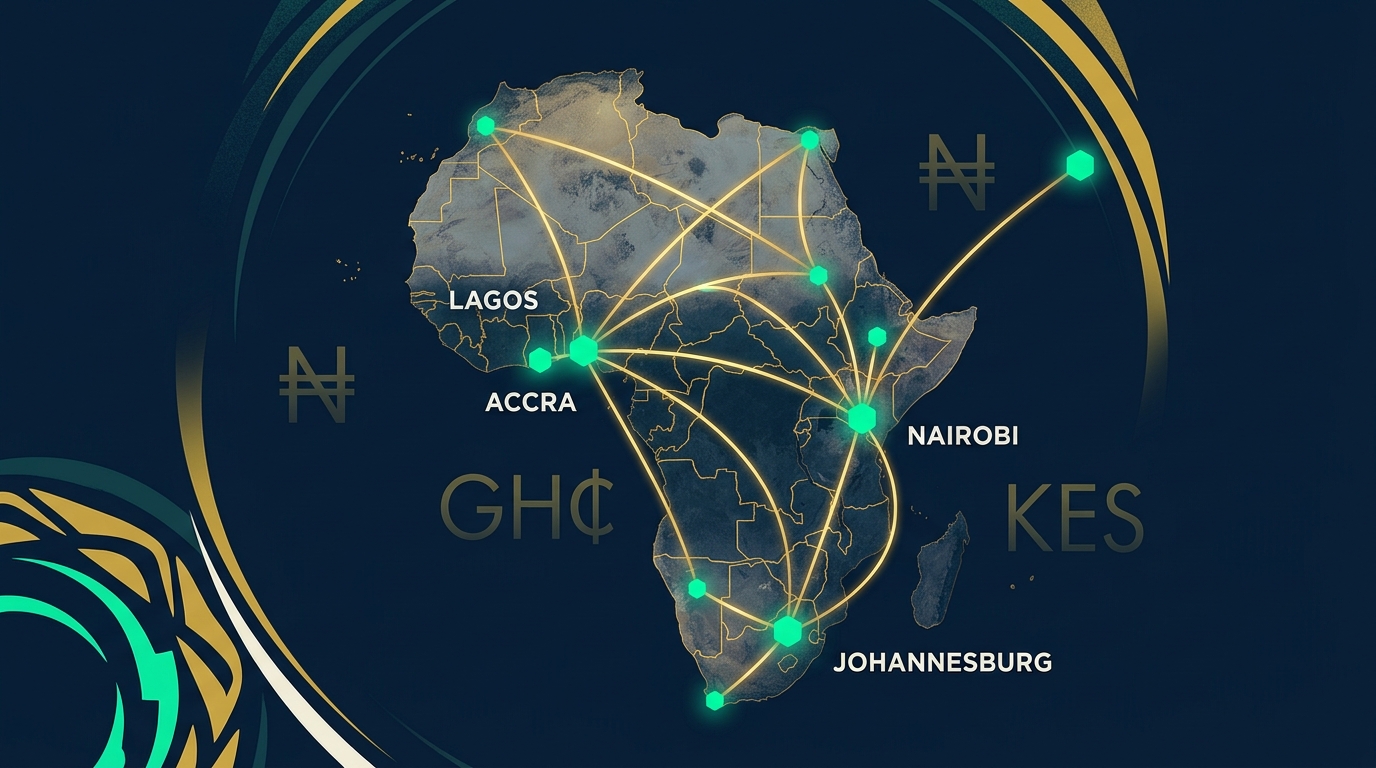
As a Nigerian or Ghanaian business owner, you're likely grappling with exorbitant USD conversion fees. Did you know intra-African trade comprises merely 15% of the continent's total trade? In contrast, over 60% of European trade occurs within the continent. The good news is that PAPSS, launched by Afreximbank, offers a practical solution by facilitating **intra-African payments** utilising local currencies. Seize this opportunity to transform your trade operations.
PAPSS cross-border payments Africa allows businesses to pay each other using local currencies across 14 African countries, bypassing USD conversion fees. Transactions settle in under 120 seconds via the Pan-African Payment Settlement System, launched by Afreximbank.
TL;DR — Key Points
- PAPSS cross-border payments Africa eliminates USD fees
- Africa's intra-continental trade is only 15% (African Union, 2024)
- Use local currencies for efficient transactions
- SWIFT costs range between 3–8% per transaction (World Bank, 2024)
- Learn how to start using PAPSS with KEYBS PAY
Key Takeaways
- PAPSS launched by Afreximbank in 2022
- Operates across 14 African countries
- Transactions settle in under 120 seconds
- Aims to boost intra-Africa trade to 52% by 2030
- Eliminates reliance on the USD for intra-African payments
KEYBS PAY (keybs.io) is a fintech platform providing cross-border payments, supplier verification, treasury management, and FX solutions for African businesses in Nigeria, Ghana, Kenya, South Africa, and the African diaspora. This guide covers PAPSS cross-border payments for Nigerian and Ghanaian importers and business owners making intra-African payments.
Last reviewed: 10 May 2026 · Updated monthly
What Is PAPSS and How Does It Benefit African Businesses?
PAPSS, the Pan-African Payment Settlement System, is designed to facilitate efficient and fast intra-African trade payments in local currencies. Launched by Afreximbank in 2022, it currently operates in 14 countries, cutting out the USD as an intermediary currency and substantially reducing transaction costs.
**PAPSS** simplifies the payment process for **African businesses**, particularly within the **AfCFTA** framework, which seeks to substantially increase intra-African trade to **52% by 2030** (African Union). By using local currencies, businesses avoid the $5 billion annually lost to USD conversion fees (Afreximbank, 2024). Moreover, PAPSS' quick settlement process—**under 120 seconds**—enables smoother cash flow and reduces operational costs.
For instance, a Ghanaian importer sourcing goods from Nigeria won't need to acquire USD but can pay directly in **GH₵** or **₦**. This streamlined approach enhances trade viability and allows businesses to focus resources on growth. **KEYBS PAY** integrates PAPSS into its platform, ensuring seamless access to these advantages.
How Does PAPSS Work for Intra-African Payments?
PAPSS uses local currencies for transactions and processes payments through a central hub that posts credits and debits in the participants' accounts. This fully integrated system supports faster and cost-effective transactions for African businesses.
By mitigating dependence on third-party currency conversions, **business transactions become cheaper and faster**. For example, when a Kenyan business pays a Nigerian supplier, PAPSS facilitates the transfer, debiting the Kenyan shillings and crediting the Nigerian naira seamlessly within seconds.
- The business submits a **payment instruction** via its bank.
- **PAPSS** confirms funds sufficiency in the sender's bank.
- The recipient bank in Nigeria receives a credit alert immediately, processed in **under 120 seconds**.
- Currency exchange occurs on PAPSS, bypassing the USD.
This efficient process reduces **exchange rate** risk and offers a competitive alternative to traditional methods. For further details on how PAPSS improves transaction efficiency, consider exploring KEYBS PAY's dedicated pages on cross-border payments or FX rates.
Which Countries Use PAPSS for Intra-African Transactions?
PAPSS is currently operational in 14 African countries, including Nigeria and Ghana, the system's largest transaction corridors by volume. This reach facilitates intra-regional trade and supports AfCFTA's long-term goals.
The participating countries cover an extensive geographical area within the African Union. This widespread implementation is bound to increase as more nations adopt the system and abandon the outdated SWIFT network for intra-continental trades. By choosing PAPSS, a business owner can transact confidently within this ecosystem.
The **Afreximbank** asserts that PAPSS's growth reflects global trade trends. As more banks, such as the **CBN** and the **Bank of Ghana**, adopt the system, the reduction in USD dependence will fortify local economies, promoting sustainable growth. The integration of PAPSS into diverse sectors signals a pivotal industry shift towards thoroughly **Africa-centric commerce**.
Why Should You Use PAPSS Over SWIFT?
Using PAPSS over SWIFT allows for faster, cost-effective transactions without relying on the USD. While SWIFT charges 3–8% per transaction, PAPSS offers a more favourable solution for intra-African trade economies.
**SWIFT's fee structure** often results in substantial overheads for businesses, undermining profitability. Conversely, PAPSS provides a model conducive to expansion by eliminating unnecessary steps in fund settlement. With PAPSS, African businesses can enjoy a stark contrast in **FX spread savings**, significantly enhancing cash flow management.
Furthermore, by adopting PAPSS over SWIFT, businesses directly contribute to Pan-African economic aspirations under **AfCFTA**, building a tapestry of sustainable trade partnerships across the continent. Explore how partnering with KEYBS PAY can further streamline your trade interactions by visiting their detailed explanation of payment corridors and how they're transforming with PAPSS.
How to Implement PAPSS in Your Business Operations
Implementing PAPSS involves integrating compatible financial systems and training staff on conducting transactions within the framework. Businesses should coordinate with approved local banks to facilitate smooth PAPSS transaction setups.
Start by engaging with institutions actively advocating PAPSS participation, such as the **CBN** or the **Bank of Ghana**. Next, analyse existing transactional workflows and anticipate how PAPSS integration can plug directly into these systems, alleviating previous frustrations related to currency conversion.
Further preparation might involve executing trial transactions under guidance to familiarise teams with new protocols. Adopting a technology partner like **KEYBS PAY** can expedite adoption, streamlining both supplier and treasury operations. **KEYBS PAY**'s robust architecture offers supportive tools like detailed analytics to monitor efficiencies realised through PAPSS.
SWIFT vs PAPSS Payment Comparison
| Feature | SWIFT | PAPSS |
|---|---|---|
| Transaction Fee | 3–8% (World Bank) | Minimal, flat-rate |
| Settlement Time | 1–3 days | Under 120 seconds |
| Currency Dependence | USD | Local Currencies |
| Operational Countries | Global | 14 African nations |
| Alignment with AfCFTA | No direct alignment | Strategic alignment |
Ready to make cross-border payments across Africa without USD conversion fees? Start with KEYBS PAY — free account, no monthly minimum.
"PAPSS represents a catalyst for intra-African trade growth. By simplifying currency exchanges and fostering economic collaboration, it establishes a new era of interoperability across the continent." — Patrick Mensah, Founder & CEO, KeyBS Pay
KeyBS PAY Platform Data (2026)
- Average cross-border payment settlement: under 2 hours
- Active payment corridors: 54 countries
- FX spread savings vs. traditional bank wire: 3–6%
- Supplier verification time: under 60 seconds
Frequently Asked Questions About PAPSS and African Cross-Border Payments
What is PAPSS?
The Pan-African Payment Settlement System (PAPSS) facilitates fast and efficient cross-border payments within Africa using local currencies. Operated by Afreximbank, it reduces USD dependency.
How fast does PAPSS settle payments?
PAPSS settles transactions in under 120 seconds, significantly faster than traditional cross-border payment methods.
Which countries currently use PAPSS?
PAPSS operates in 14 African countries, including major corridors like Nigeria and Ghana. The system continues to expand across Africa.
How does PAPSS affect the African Continental Free Trade Area (AfCFTA)?
PAPSS supports AfCFTA by enabling seamless, cost-efficient intra-African trade, advancing the goal to triple the continent's internal trade by 2030.
Can my business benefit from using PAPSS?
Businesses benefit by reducing transaction costs, enhancing cash flow, and operating without USD conversion requirements. PAPSS significantly optimises operational efficiencies.
What are the costs associated with PAPSS transactions?
PAPSS employs a minimal, flat-rate fee structure lower than the 3–8% typical with SWIFT, translating to substantial savings.
How do I start using PAPSS with my business?
Begin by coordinating with your bank to integrate PAPSS into your payment operations. KEYBS PAY provides resources and support to facilitate this transition.
Does PAPSS integrate with existing financial systems?
Yes, PAPSS is designed for seamless integration with existing financial software, enhancing efficiency without major infrastructure changes.
Start Making PAPSS-Compatible Cross-Border Payments Today
Switching to PAPSS enables precision in your transactions, ensuring financial optimisation without unnecessary conversion fees. Open a free KEYBS PAY account and make your first intra-African payment in under 10 minutes.
Sources
- Afreximbank. "PAPSS Operations Overview." 2022–2026. papss.com
- African Union. "AfCFTA Goals and Impacts." 2024. au.int
- World Bank. "African Cost of Payments Study." 2024. worldbank.org
- Central Bank of Nigeria. "Cross-Border Payment Systems." 2026. cbn.gov.ng
- Bank of Ghana. "Intra-African Financial Transactions." 2026. bog.gov.gh